
Boundaries in Blended Families
By Candor & Hope Therapy Inc.
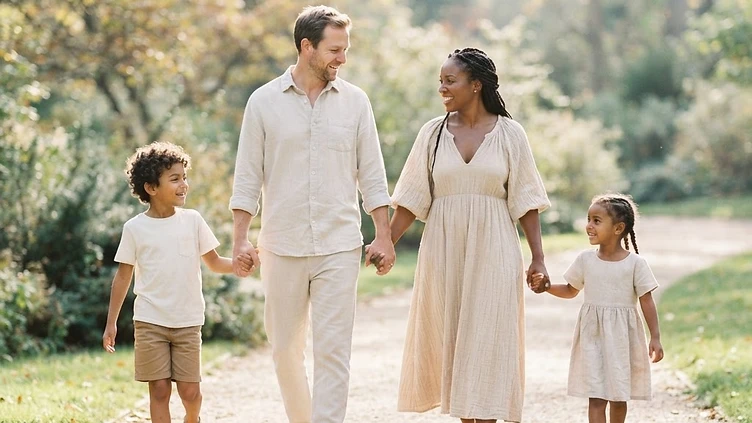
Blended families are built, not born. Here's how to create the structure, roles, and boundaries that help a new family feel like one — without forcing it.
A blended family is one of the most loving and demanding relationships a person can build. It is a family made of choice rather than only biology, and like anything made by choice, it requires ongoing intention. The families who do this well are not the ones who feel instant unity — they are the ones who build the structure that lets unity grow over time.
## Blended families are built, not born
The expectation that a blended family should feel instantly cohesive is one of the cruelest myths we carry. Children did not choose the new arrangement. A new partner did not choose the children. Everyone is adjusting to a loss, a change, and a hope all at once, and that takes longer than anyone wants it to.
Patience is not a soft virtue here — it is the central one. Relationships in a blended family develop on their own timeline, and trying to accelerate intimacy usually slows it down.
## The parenting partner and the stepparent
One of the most important boundaries in a blended family is between the role of parent and the role of stepparent, especially in the early years. The biological or adoptive parent remains the primary authority for their child — for discipline, major decisions, and the rhythm of daily life. The stepparent, initially, is best positioned as a caring, consistent adult in the child's life rather than a third parent.
This is not a demotion of the stepparent. It is a structure that protects the child's existing attachments and gives the new relationship room to develop without pressure. Over time, and at the child's pace, the stepparent can take on more — but that is earned through trust, not claimed through role.
## Let the child lead the relationship
Children in blended families are often managing loyalty binds they cannot name. Warming to a stepparent can feel like a betrayal of their other parent. Pushing them to call the stepparent "mom" or "dad," or to demonstrate affection on a schedule, intensifies that bind.
Let the child set the pace and the terms. Some will move toward closeness quickly; others will take years. Both are normal. The stepparent's job is to be reliably warm and consistently present, not to extract a particular feeling by a particular date.
## Discipline: who handles what
A common and corrosive pattern is the stepparent moving into a disciplinarian role too early. Children experience this as an intrusion, and it often damages the relationship the stepparent is trying to build. A useful early guideline: the parent disciplines; the stepparent supports the parent and manages their own relationship with the child.
As trust builds, this can shift. But it shifts because the child has come to trust the stepparent's authority, not because the adults have decided it is time.
## The couple's relationship is the foundation
The single most stabilizing force in a blended family is the relationship between the two adults. When the couple is united, respectful, and aligned, the whole system relaxes. When the couple is in conflict — especially about the children — the children feel it and often act it out.
Protect the couple's relationship deliberately. Have disagreements away from the children. Present a united front on decisions that affect the household. Keep the channels of communication open, and bring in support — therapy, a blended-family group, books — before a small crack becomes a fault line.
## The other parent
How the adults handle the other parent (the child's parent outside the home) shapes the child's experience more than almost anything else. Children should never be made to carry messages, choose sides, or witness conflict between their homes.
Keep the child out of adult logistics. Communicate parent-to-parent, through whatever channel works, and keep it businesslike if warmth is not available. The child's peace is worth more than being right.
If the other parent is unsafe or absent, that is a different conversation, often best supported by a therapist. But in most cases, the goal is respectful coexistence — not friendship, just consistent, low-conflict cooperation.
## New traditions, honored history
A blended family does not replace what came before; it adds to it. Children need their history and their existing traditions honored even as new ones are created. Forcing a single unified family narrative often asks the child to erase a part of themselves.
Let both exist. The old traditions and the new ones can share a calendar. The child can love more people without loving anyone less.
## When to get help
Blended families benefit enormously from support, and seeking it is a sign of investment, not failure. Family therapy, a parenting group for blended families, or even a few sessions with a couples therapist to align on parenting can prevent years of drift.
The families who thrive are not the ones who never struggle. They are the ones who keep choosing to repair, realign, and rebuild — together.